
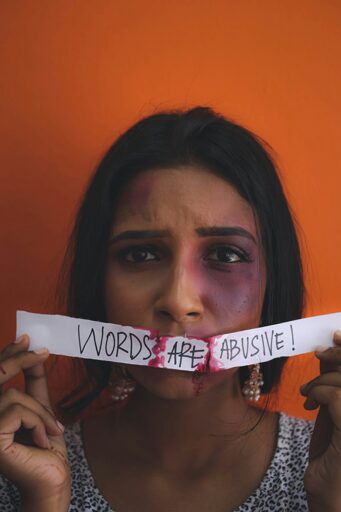
This is an interesting example of both the promise and the limitations of predictive AI. The potential value is clear: AI may be able to identify patterns in speech that humans would miss and use those signals to prompt earlier support for people who may be experiencing trauma or violence. But this also highlights a familiar challenge with predictive systems. They are identifying statistical patterns, not actually “knowing” what is happening to a person. A vocal pattern associated with trauma or distress could have many possible causes, which raises the risk of false positives and of attributing too much meaning to what is ultimately an indirect signal. That concern is not merely theoretical here. Based on the results reported in the underlying study, about 46% of the non-survivors in the test group were incorrectly flagged as survivors. This is still early-stage research with a small sample, but it illustrates the challenge particularly well: even when an AI system is detecting a real statistical pattern, that does not necessarily mean it can reliably infer the human condition behind that pattern. That does not mean the technology is without value. It may be quite useful as one input that prompts further human assessment. The critical question is what happens after the AI flags someone. There is a big difference between using a signal to encourage a sensitive follow-up conversation and treating the prediction itself as evidence that gender-based violence is occurring. This seems to me to be one of the central challenges of predictive AI: the prediction may be useful, but the consequences of being wrong matter enormously. submitted by /u/kmcolo
Originally posted by u/kmcolo on r/ArtificialInteligence
You must log in or # to comment.