
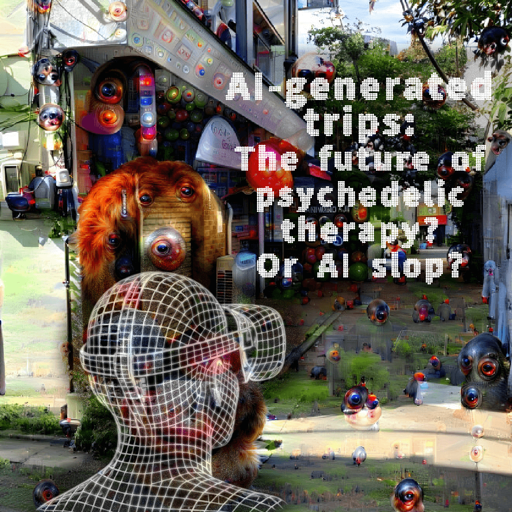
It’s undeniable that AI has made its way into our lives abruptly. At first, many were scared as Sci-Fi movies constantly warned us of a future robotic takeover — but instead, we are currently facing an intellectual takeover by the various platforms of AI. From asking ChatGPT what we should do for breakfast, to asking them to become our mentors, therapists, or even using other AI tools to generate art, there is one specific computer vision program (now also powered by AI) that has been around for decades, that has evolved to translate into something different, to create images using convolutional neural network to find and enhance patterns in images using algorithmic pareidolia, creating a dream-like appearance that reminded users of a psychedelic experience by generating over processed images, a program which the Google engineer Alexander Mordvintse named DeepDream. Such resemblances between the visuals in psychedelic trips and the images generated by DeepDream were what fueled the research by Giuseppe Riva, Giulia Brizzi, Clara Rastelli, and Antonino Greco — by picking up the engine that allowed people make trippy images for decades, we could now allow people to experience “psychedelic visuals” without actually having to take the compound. Could this be the future of psychedelic therapy? Or more AI-Slop? submitted by /u/BorodinAldolReaction
Originally posted by u/BorodinAldolReaction on r/ArtificialInteligence